
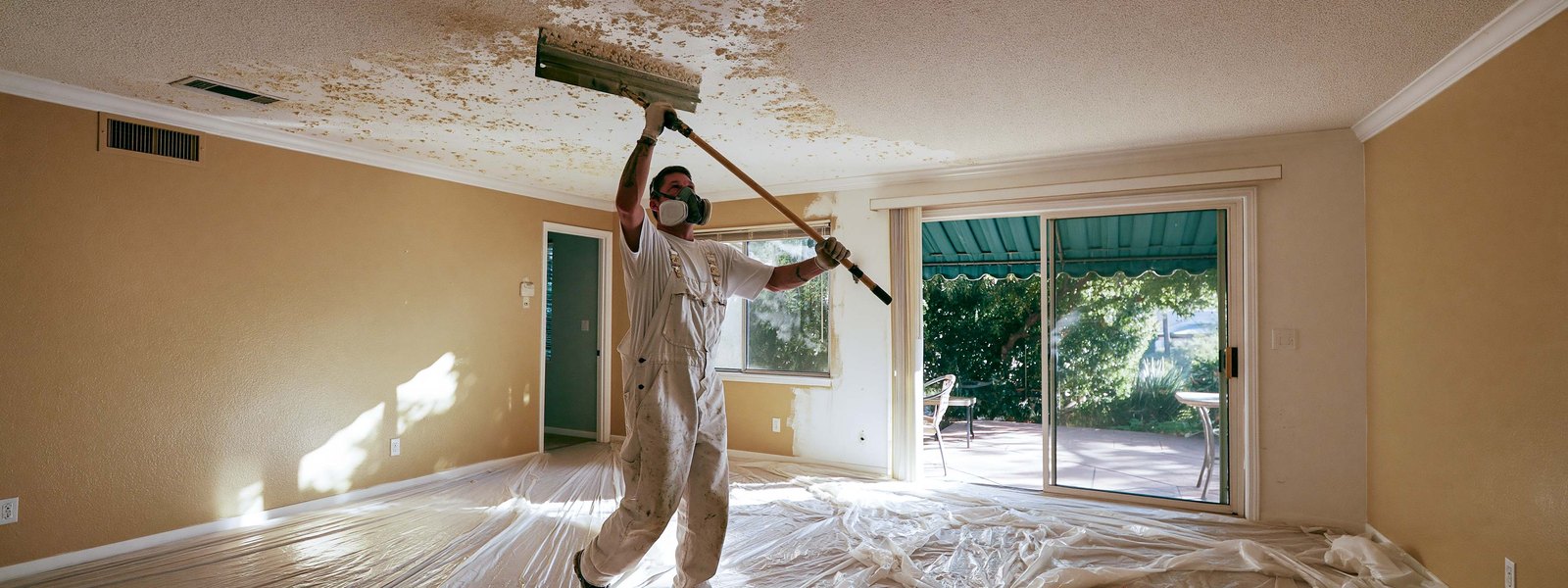
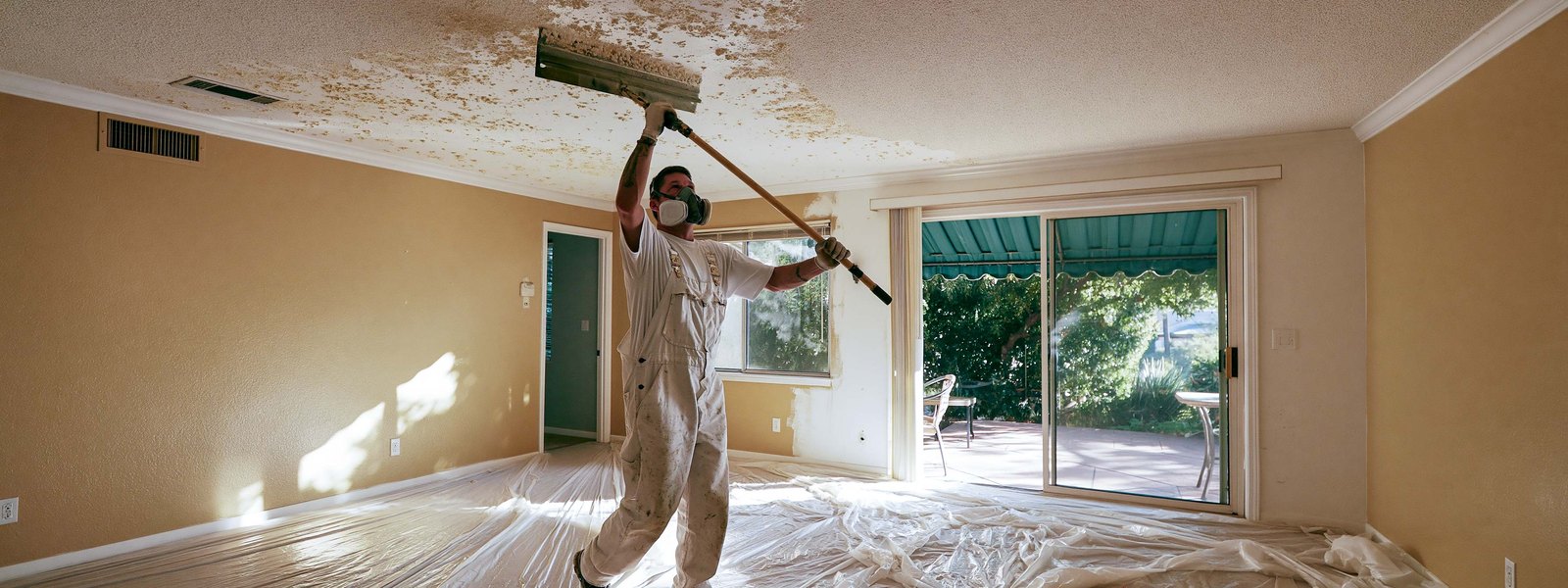
A contractor in a respirator scraping a sprayed ceiling, the floor below covered in sheeting

Popcorn Ceiling Removal in Sacramento, CA

Taking it down is the cheap half. What you're really paying for is the ceiling that was hiding under it.

A contractor scraping a sprayed ceiling in a cleared room, plastic sheeting across the whole floor

The Year of the House Decides This Job

If your house went up before 1978, the job starts with a test rather than a scraper, and that applies to Sacramento Expert Drywall exactly as it applies to anybody else. Spray texture from that era can contain asbestos, and the only way to know is a lab.

A mail-in kit is $30 to $60 a sample and a professional inspection is $300 to $600. Either way it's cheaper than the alternative, which is turning a two-day job into a regulated one halfway through, with a house full of dust nobody planned for.

1978 is a rule of thumb and not a wall. Material already sitting on a supplier's shelf kept going up on ceilings for a while after that, so a house from the early eighties isn't automatically clear. Every popcorn ceiling removal in Sacramento starts with the asbestos question here, because the answer changes the job, the price and who is legally allowed to do the work.
What It Actually Costs, Per Square Foot

Every figure you find online for this job disagrees with every other one, and there's a reason. They're quoting whole-job totals for rooms of different sizes, so a small hallway and a two-story great room end up averaged into one useless figure. Per square foot is the only figure worth comparing, so those are the ones we print.

Two bands, and most people only get quoted the first one

Scraping it off runs about $2 to $4 per square foot. That's getting the material off and your room cleaned up, and it's the figure most quotes are built from.

Removal plus bringing the ceiling back to a smooth, finished surface runs about $3 to $8 per square foot. That's the real figure for most houses, and the gap between the two bands is where the arguments happen.

Why the second band is the one that matters

Under that texture is a ceiling that nobody ever finished properly, because nobody was ever going to see it. Once the material is off you're looking at joints, fixings and whatever the original crew decided was good enough under a coating. Making that flat and even is skilled work and it's most of the day.

Our quote says which of the two it is, in writing, so you can see at a glance whether another one is describing the same work. A figure at the bottom of the first band and one in the middle of the second are answering different questions, and knowing that is most of what makes quotes comparable.

Which of the Two Jobs You Have

What year your house went up, which decides whether testing comes first
Whether the ceiling has ever been painted, because a painted coating comes off differently
How big the room is, since setup is a fixed cost spread over the area
Whether the surface underneath was ever finished, or only ever coated
Whether there's anything up there that has to come down first, like a fan or a fixture
Whether you want a smooth ceiling at the end, or a new texture over the top

If the Test Finds Asbestos, Here Is Exactly What Changes

Start with the reassuring part, because it's the part people aren't told: a ceiling containing asbestos isn't doing you any harm while it sits up there undisturbed. What changes is the job. It stops being a scrape and becomes asbestos abatement, carried out under containment by a contractor licensed for that work specifically.

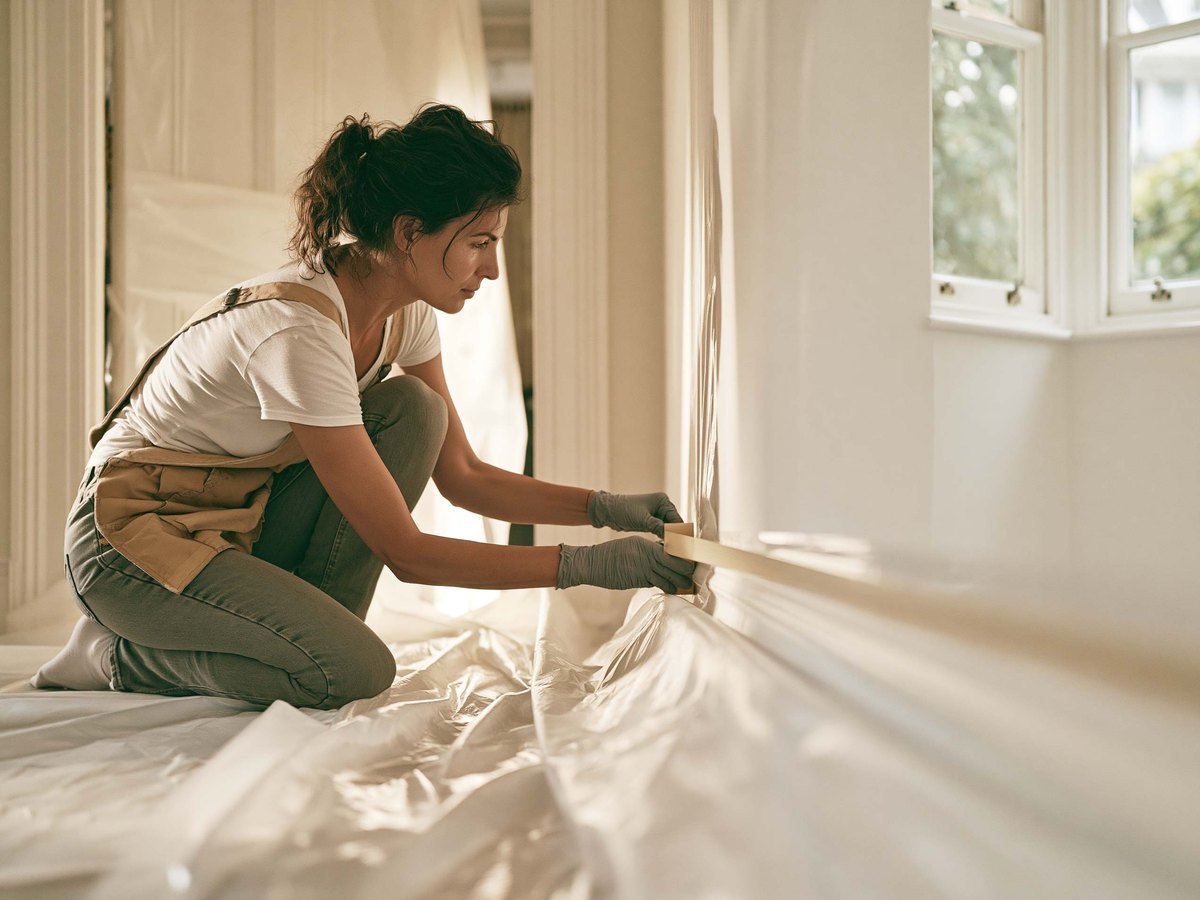
Someone kneeling to tape protective sheeting along a baseboard before work starts

Asbestos abatement is a different trade at a different price

Asbestos abatement runs about $8 to $15 per square foot , and up toward $20 where access is awkward or the area is small. It moves with how much area is involved, how the room has to be sealed off, and how the material comes away. California regulates this work closely, and the agency with jurisdiction has the final say on who may do it and how.

We're not that contractor and we'll not pretend otherwise. What we do is tell you what the result means, hand you back the decision, and pick the work back up once the ceiling is clear.

Sealing the asbestos in place is the other honest option

If the test finds asbestos and you can live with a textured ceiling, leaving it sealed in place is a legitimate choice and often the cheapest one. Encapsulating keeps the asbestos exactly where it's and gets you a clean-looking room without disturbing anything. For a rental, or a house you plan to sell in a couple of years, it's frequently the right call and we'll say so.

The one approach worth avoiding is a partial one: half-scraping an asbestos ceiling, feathering an edge, or pulling a section down to look underneath. Left sealed and undisturbed it's stable, so the choice is a proper abatement or leaving it in place, and both are good answers.

What Decides Your Price

Area is the big one and setup is the surprising one. Covering a room, sealing it off, protecting your floor and getting everything out of the way happens whether it's one bedroom or the whole upstairs. So a small room costs more per square foot than a large one.

The rest is what your ceiling turns out to be under the coating, and nobody knows that until a corner comes down. We look at a test patch before we quote the finish work, which is why our figure for that half arrives after the visit rather than over the phone.

How the Day Actually Goes

You're letting people take a ceiling apart above your furniture, so it's fair to want the sequence in advance.

What happens, in order

  • Everything that can leave the room leaves, and what stays gets sealed under plastic
  • Floors get covered wall to wall, and doorways get closed off from the rest of the house
  • Fixtures and fans come down, with the power off at the panel
  • The coating comes off wet, never dry, which keeps the dust down and the mess in the room
  • The surface underneath gets read, and you get told what it needs before the finish work starts
  • The ceiling is brought to a smooth, even surface and left ready for your painter

The wet method isn't optional in our book

Dry scraping is faster and it turns your house into a snow globe. Wetting the material first means it comes away in sheets into a drop cloth instead of hanging in the air for three days. That's an hour at the start of the day, and it saves you two weeks of finding dust on the tops of door frames.

Ask whether painting is included, because it usually isn't

Almost nobody in this trade includes the paint, and we don't either. What you get from us is a ceiling your painter can start on without touching it up first, and our quote says so plainly so there's nothing to wonder about later.

How much does popcorn ceiling removal cost in Sacramento?

Scraping it off runs about $2 to $4 per square foot. Removal plus bringing your ceiling back to a smooth finished surface runs about $3 to $8 per square foot, and that second band is what most houses actually need. If the ceiling tests positive for asbestos, abatement runs about $8 to $15 per square foot and is a licensed abatement contractor's work.

Does my ceiling need testing for asbestos?

If your house went up before 1978, yes, before anyone touches it. Material stayed in circulation for a while after that date, so an early-eighties house isn't automatically clear either. A mail-in kit is $30 to $60 a sample and a professional inspection is $300 to $600.

Can I scrape it myself?

You can, if it has tested clear and you have a free week and no attachment to your floors. What people underestimate isn't the scraping, it's the ceiling underneath. Getting that flat enough to paint is the part that makes the room look finished, and it's the part that goes wrong.

What's under my popcorn ceiling?

An unfinished ceiling, in most houses. The coating went on partly because it hid joints, fixings and a fast finish, so once it comes off you're looking at all of it. That's normal and it's not damage, but it does have to be dealt with before the room reads as done.

Can you put a new texture on instead of leaving it smooth?

Yes, and plenty of people do. A light spray texture over a properly prepared ceiling costs less than taking it all the way to smooth, and it suits some rooms better. We'll show you both on your own ceiling before you choose.

How long is my room out of use?

A single room is usually a day for the removal and a day or two of finish work after it, with drying time between. We seal the working room off from the rest of your house, so you lose that room rather than your whole floor.

Ceiling Repair

What we do when the ceiling itself is failing and not just looking dated.

Read more →

Texture Matching

Bringing a new finish into line with the rooms you're not touching.

Read more →

Taping and Finishing

The standard your bare ceiling is finished to once the coating is gone.

Read more →

Drywall Repair

The walls in the same room, and why they open up where they do.

Read more →

Orangevale

1960s and 1970s stock, where almost every original ceiling still has it.

Read more →

Rancho Cordova

Aerojet-era tract housing, built in the years this coating was standard.

Read more →
Two children running through a sunlit living room with the garden doors standing open

Get Your FREE Estimate

Tell us roughly when the house was built and we'll take it from there. Testing first, and the quote is free.

A ceiling from this decade, in the house you already own.

Call Us Now! 916-584-9660